Today, Bookstagram and BookTok can launch books and careers into the stratosphere. But when I joined publishing, social media was often an afterthought, a greatly under-utilized tool with untold potential. I was at the forefront of finding new and innovative ways to use social media at 3 of the world’s biggest publishers. Here is just a brief taste of some of the tactics I helped pioneer that are now industry standard.
Random House (2011 - 2012)
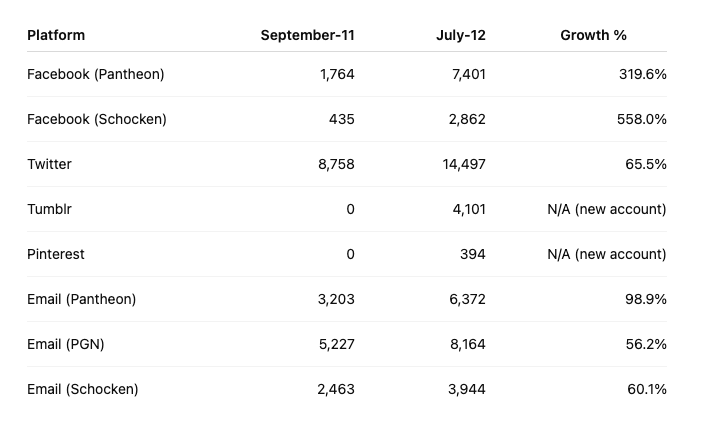
When I was asked to take over the digital properties for Pantheon Books in September 2011, the imprint was only active on Facebook and Twitter, and was not consistently posting on either. I quickly created a streamlined look and consistent voice for the imprint, and drastically increased engagement on existing platforms while establishing a presence on new platforms like Tumblr, Pinterest, and Goodreads.
The “Get Social with Pantheon Books” campaign was launched with MOO Cards at San Diego Comic Con 2012, where we handed out thousands of cards with a QR code leading to a landing page of our socials.
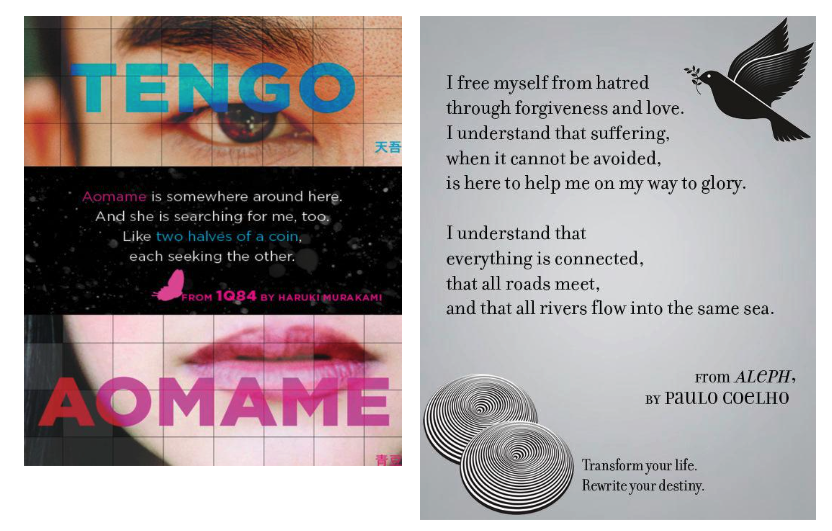
As someone who keeps on top of digital trends, I had noticed that younger users on places like Tumblr and Pinterest had taken to turning quotes into graphics. When it was suggested that I seed out some quotes from Haruki Murakami’s 1Q84 (Knopf, October 2011) on Tumblr, I saw an opportunity to try out a potentially effective trends in the book marketing world. I created a set of carefully-designed quotegraphics that fit the themes of the book and released them in the weeks leading up to onsale. The response was enormous, generating 1,600 likes and reblogs, and driving over 10,000 clicks to the pre-order page.
From that day on, these quote cards, which have since become de rigueur in publishing, have been an important tool in my social media arsenal.
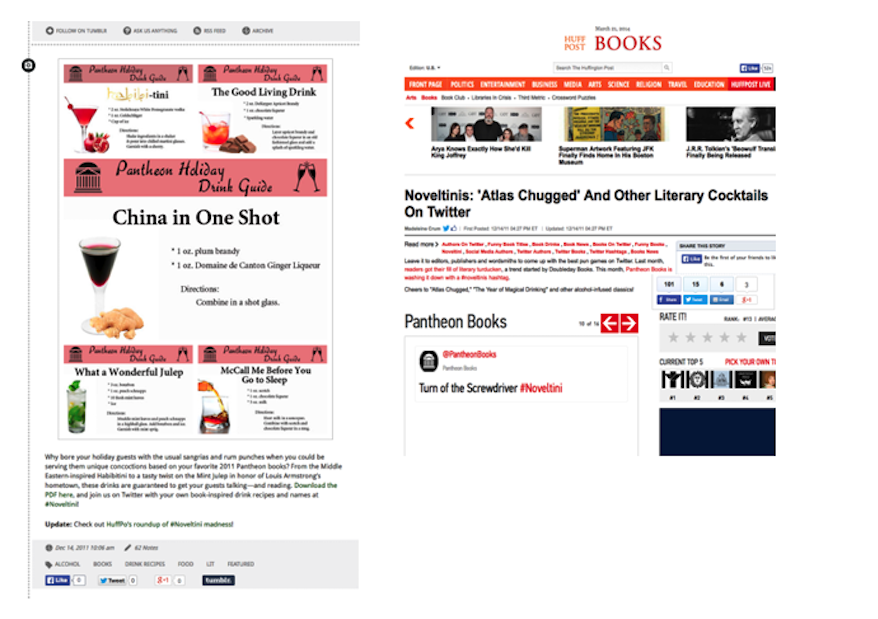
As a holiday promotion in 2011, I created eCards pairing cocktail creations with Pantheon Books which were deployed on Tumblr and promoted with a #Noveltini Twitter hashtag which trended worldwide and was picked up by the Huffington Post.
HarperCollins (2012 - 2014)
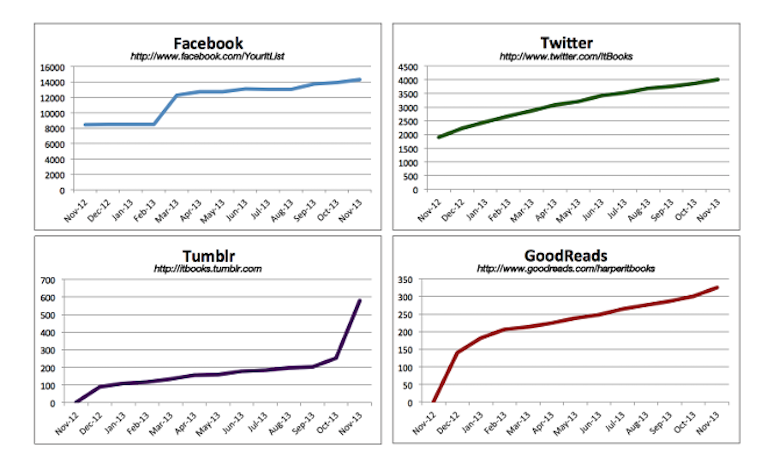
When I joined It Books in the fall of 2012, the imprint’s social media presence was still nascent. There was a Facebook page with low engagement and a Twitter account with fewer than two thousand followers. I quickly redesigned both accounts and worked to get the Twitter account verified. I also established a presence for It Books on social networks like Tumblr, Goodreads, Instagram, and Foursquare.
Within a year, the Facebook and Twitter accounts had doubled in followers and seen a significant increase in engagement, and the new accounts at Tumblr and Goodreads had seen incredible growth. And when It Books rebranded to Dey Street Books in 2014, I was the one spearheading the new branding initiative.
I was a major in-house advocate for the acquisition of the My Drunk Kitchen book by Hannah Hart (It Books, August 2014). Aside from being a major fan of her show for years, I recognized that the young stars of YouTube have a unique connection with their fans that has real, trackable earning potential, evidenced by the fact that Hannah’s Indiegogo campaign to launch a national tour hit its 50K mark within 24 hours, eventually coming in at 223K.
When we acquired the book, I made a strong case for having a very carefully considered rollout of assets to capitalize on her fan’s intense interest. All mentions of the book were kept out of the trades and off retailers until we had a cover ready to go.
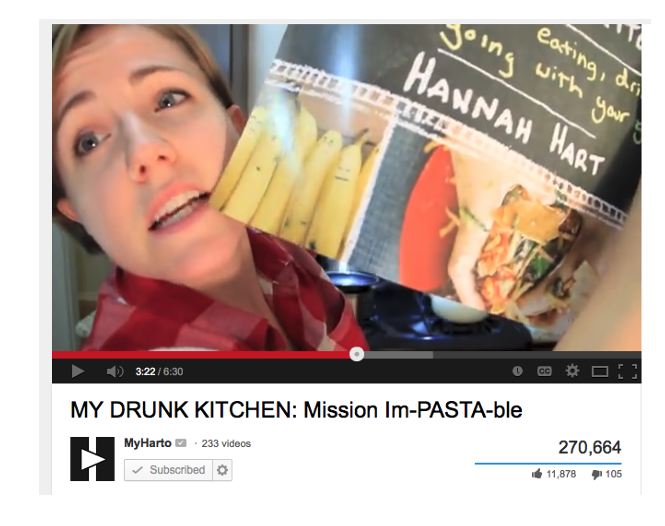
Once that was in place, I worked with Hannah to unveil it on her YouTube channel. I made sure the book, along with jacket image and copy, were live on the retailers a few hours before her video released.
The response was enormous. Within 24 hours, the book received over 1,000 pre-orders on Amazon, hitting the top 20 eight months before it was even on sale. The video received 150,000 views, and her Facebook post got 1,220 likes and 78 shares, getting the book off to a spectacular start that culminated into being an instant New York Times best seller.
Macmillan (2014 - 2018)
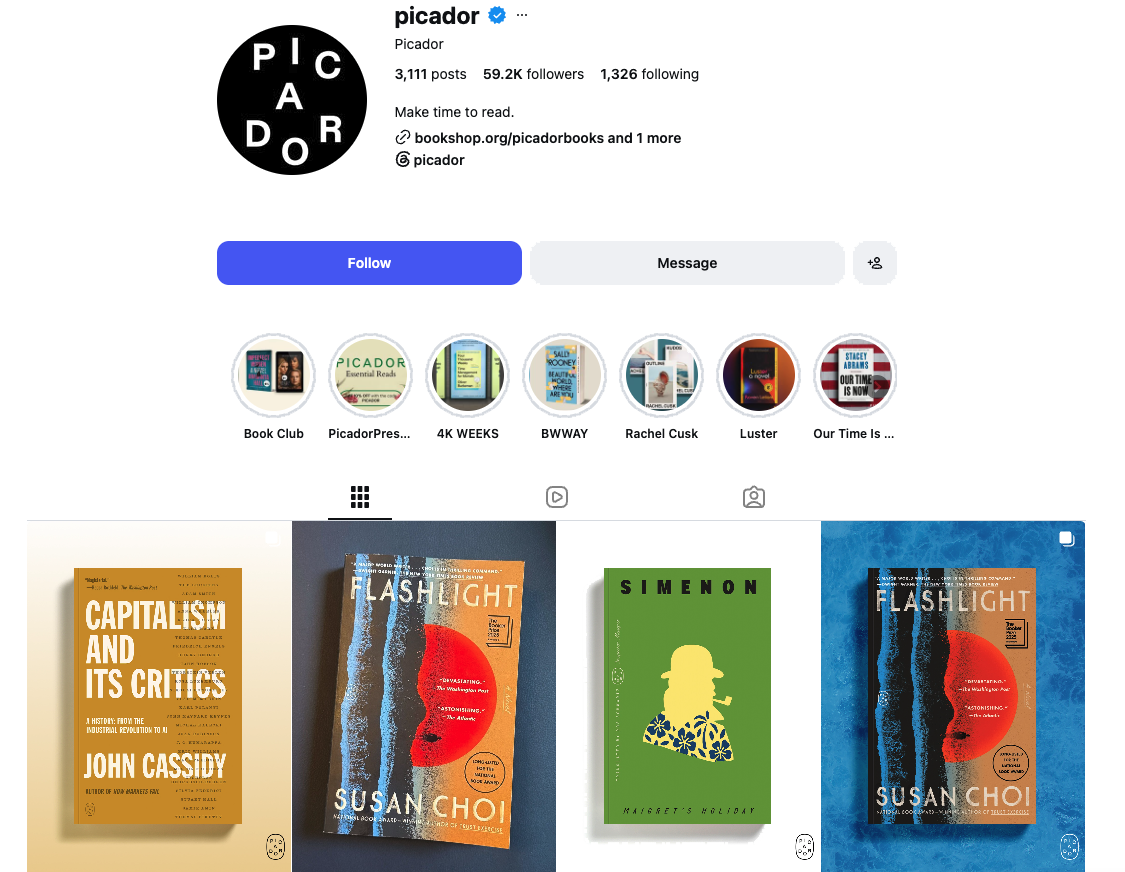
I had quite the challenge ahead of me when I was tasked with quickly growing an Instagram presence for Picador. When I took over, we had around 60 followers, a lack of content, and the clunky handle of @PicadorUSA. In just one year, I grew our following to 25K, secured the sleeker @picador handle and got the page verified, and created a program of mixing thoughtful original content with amplification of the voices of the many influencer connections I cultivated.
My favorite project at Macmillan was easily the Picador Modern Classics launch. I created the tagline (“Where will you take your Picador Modern Classics? Where will they take you?”) and both created and curated a full campaign of stylish, travel-focused posts that touted the portability of these great repackages.